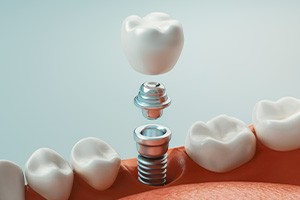
Following tooth loss, patients in Gorham, Westbrook, and across Southern Maine face a critical decision: how to best restore their smile, function, and oral health. The three primary solutions—dental implants, fixed bridges, and removable dentures—each represent a different philosophy of care with significant trade-offs. This guide provides a detailed, neutral comparison to help you navigate this choice. We will move beyond simple price tags to examine the fundamental differences in stability, impact on your long-term oral health, daily lifestyle, and true cost over time. Our goal is to equip you with the knowledge to have a productive conversation with your Gorham dental provider and select the option that best aligns with your health, budget, and personal goals for the future.
Key Takeaways (TL;DR)
Dental implants are fixed, standalone replacements that preserve jawbone, don’t affect adjacent teeth, and offer the most natural function, but have the highest upfront cost and longest treatment time.
Fixed dental bridges are a stable, non-removable solution that’s faster and less expensive than implants but require altering healthy neighboring teeth and do not prevent bone loss underneath.
Removable dentures are the most affordable and fastest option for replacing many or all teeth, but they can slip, restrict diet, accelerate bone loss, and require ongoing adjustments and replacements.
The key differentiators are stability (fixed vs. removable), impact on adjacent teeth and jawbone health, longevity, and overall cost of ownership over 10+ years.
The “best” option depends on your specific clinical situation, overall health, budget, and personal priorities for comfort and convenience, which can be determined in a comprehensive consultation.
The Core Decision: Fixed vs. Removable – Understanding Stability
The most fundamental difference between your options is whether your new teeth will be a permanent part of you or a removable appliance. Fixed solutions—like dental implants and traditional bridges—are cemented or attached in a way that they cannot be removed by the patient. They become a seamless part of your smile, offering stability that allows for confident eating and speaking without worry of movement.
Removable solutions, namely partial or full dentures, are designed to be taken out daily for cleaning. They rely on physical retention—suction against the gums, metal clasps around teeth, or adhesive pastes—which can sometimes fail, leading to slippage or rocking. This distinction affects everything from the foods you can comfortably eat to your confidence in social situations. For active residents in Gorham and Windham, a fixed solution often aligns with a desire for a “set-it-and-forget-it” restoration that mimics natural teeth as closely as possible.
Side-by-Side Comparison: A Detailed Breakdown
The following table provides a clear, at-a-glance comparison of the three primary tooth replacement options across the most important categories for Gorham-area patients.
| Feature | Dental Implant | Traditional Dental Bridge | Removable Denture |
|---|---|---|---|
| Stability & Feel | Fixed; feels and functions closest to a natural tooth. | Fixed to adjacent teeth; feels solid but relies on abutment teeth. | Removable; can slip or rock, affecting speech and chewing confidence. |
| Impact on Jawbone | Preserves bone through osseointegration (fusion). | Does not prevent bone loss in the area of the missing root. | Can accelerate bone resorption (shrinkage) over time. |
| Impact on Adjacent Teeth | No impact on healthy neighboring teeth. | Requires grinding down healthy teeth to serve as abutments. | Puts pressure on gums/teeth; no alteration but clasps may weaken teeth. |
| Treatment Time | 3–9 months (includes healing period for osseointegration). | 2–4 weeks. | 3–6 weeks for conventional dentures. |
| Longevity | 25+ years with proper care; often a lifetime solution. | 10–15 years average; abutment teeth at risk. | 5–7 years before needing reline or replacement. |
| Upfront Investment | Highest. | Moderate. | Most affordable. |
| Maintenance | Brush and floss like a natural tooth. | Special flossing under pontic; risk of decay on abutments. | Remove daily for cleaning; adhesives often needed. |
Impact on Oral Health: The Hidden Consequences
Your choice affects more than just the gap in your smile; it has lasting consequences for your overall oral health. The most significant is jawbone preservation. Only dental implants replace the tooth root, providing the necessary stimulation to keep the jawbone healthy and intact. Without this stimulation, which occurs with bridges and dentures, the bone gradually resorbs, which can lead to changes in facial structure over decades.
Furthermore, a traditional bridge requires the irreversible alteration of the two healthy teeth on either side of the gap (the abutment teeth). These teeth are ground down to crowns, making them more susceptible to decay and future root canal treatment. In contrast, implants are independent, leaving your natural teeth untouched. Hygiene is also a factor: cleaning under the false tooth (pontic) of a bridge is challenging, while caring for an implant is as straightforward as caring for your natural teeth.
Lifestyle & Daily Experience Compared
The practical, day-to-day differences between these options are substantial. Dietary freedom is a major consideration. Implants and bridges allow you to eat virtually anything, including crunchy apples, chewy steak, and sticky caramel. Dentures, however, can limit your diet; many wearers avoid certain foods that are difficult to chew or that may dislodge the appliance.
- Speech: Fixed options typically do not affect speech. New denture wearers often experience a period of adjustment where lisping or clicking may occur.
- Convenience: Dentures require a daily routine of removal, cleaning, and sometimes application of adhesives. Fixed options are cleaned in place as part of your normal brushing and flossing regimen.
- Comfort & Security: The stability of a fixed solution provides peace of mind in social and professional settings, eliminating the fear of an appliance moving or falling out.
Understanding the Cost Over Time (The 10-Year View)
While initial price is important, the true financial impact is seen over a decade or more. A dental implant’s cost is concentrated upfront, but it is designed to last for decades with minimal additional expense. Other options have lower initial costs but come with predictable, recurring future expenses. For a detailed look at the variables that affect the upfront investment, see our guide on dental implant cost factors in Gorham.
| Option | Initial Cost | Common Future Costs (Over 10 Years) | Potential Total (10-Year View) |
|---|---|---|---|
| Dental Implant | Highest | Very low maintenance; unlikely to need replacement. | High, but stable (cost is primarily upfront). |
| Traditional Bridge | Moderate | Risk of decay/repair on abutment teeth; replacement likely needed after 10-15 years. | Moderate to High (initial cost + future replacement). |
| Removable Denture | Most Affordable | Adhesives, relines every 2-3 years, replacement every 5-7 years. | Low to Moderate (steady recurring costs). |
Candidacy: Who is a Good Fit for Each Option?
Not every option is biologically possible for every patient. Your candidacy is determined during a clinical exam and with 3D imaging at a Gorham practice.
- Ideal Implant Candidate: Has sufficient jawbone density (or is a candidate for bone grafting), is in good general and oral health, is a non-smoker or willing to quit, and values a long-term, health-preserving solution.
- Ideal Bridge Candidate: Has strong, healthy teeth adjacent to the gap that can support the bridge, wants a fixed solution more quickly and for less initial cost than an implant, and understands the long-term risks to abutment teeth.
- Ideal Denture Candidate: Has lost many or all teeth, seeks the most economical solution, may have health or bone issues that preclude surgery, or needs an immediate temporary restoration.
Making Your Decision: A Local Gorham Perspective
There is no single “best” option—only the best choice for you. Start by ranking what matters most: Is it upfront budget, treatment time, long-term health, dietary freedom, or convenience? Use this guide as a conversation tool with your dentist. Bring these comparison points to your consultation to discuss how they apply to your specific X-rays, oral health, and lifestyle in Gorham or Windham.
A qualified implant dentist in Gorham will help you navigate this decision by first identifying which options are clinically viable for you and then explaining the pros and cons of each in the context of your personal goals. This collaborative approach ensures that your final choice is one you can feel confident about for years to come, restoring not just your smile, but your quality of life.
People Also Search For (PASF)
- Which is more painful: implants or bridges?
- Can I get a bridge if I have gum disease?
- How many implants are needed for a full denture?
- What is the failure rate of dental bridges?
- Cheapest way to replace a missing tooth